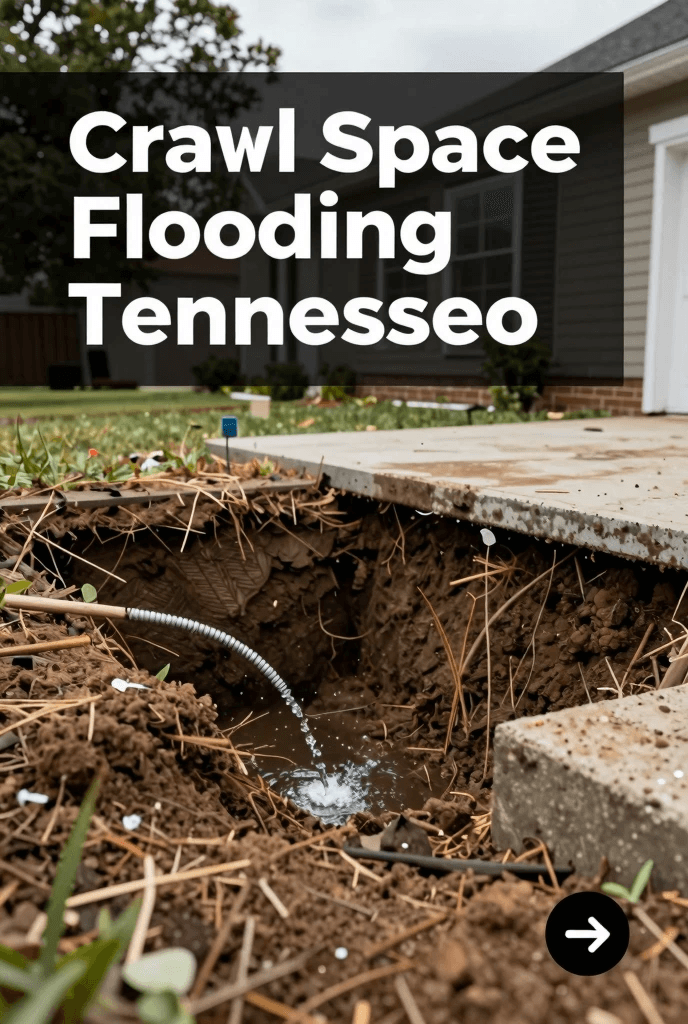
Walk through any established Murfreesboro neighborhood and you are walking above a hidden vulnerability that most homeowners rarely think about until it fails. The majority of homes built in Rutherford County before 2010 — and a significant number of those built after — have crawl spaces beneath their floor systems rather than concrete slab foundations. In Middle Tennessee’s climate, these crawl spaces are consistently the most expensive and least monitored source of water damage in residential properties.crawl space flooding murfreesboro tn middle tennessee.
This guide covers why crawl space flooding is so common in this region, what it actually does to your home’s structure over time, how to distinguish between different causes that require different solutions, and what a proper professional response looks like. None of this information is specific to Tennessee in the abstract — it is written around the specific soil conditions, rainfall patterns, construction practices, and home styles that define the Murfreesboro and Rutherford County housing market.
Why Middle Tennessee’s climate and soil make crawl space flooding almost inevitable without proper management
Middle Tennessee’s annual rainfall averages approximately 52 inches, with the heaviest concentration falling between March and May. This is the period when Rutherford County’s soils are most vulnerable to saturation — the ground is cold, frost events have reduced biological activity that would normally allow faster absorption, and the accumulated precipitation from the preceding months has raised the water table.
Tennessee’s soil composition in the Murfreesboro area includes significant clay content — particularly in the middle portions of Rutherford County where much of the residential development sits. Clay soil has a very low permeability rate. During a sustained rain event, clay-heavy soil absorbs water slowly and then holds it near the surface for extended periods. This creates a condition called hydrostatic pressure — the pressure of water-saturated soil pushing against the exterior walls of a crawl space enclosure.
When hydrostatic pressure exceeds the drainage capacity of a crawl space’s perimeter venting system or its foundation wall seals, water enters. It does not need a crack or a structural failure to get in. It enters through the natural porosity of masonry block foundation walls, through the gaps around utility penetrations, through crawl space vents that are designed to allow air movement but provide no barrier against driven water during heavy rain, and in some cases simply through the ground surface itself when the water table rises to the level of the crawl space floor.
The three primary causes of crawl space flooding murfreesboro tn middle tennessee
1. Surface water intrusion from improper lot grading
The single most common cause of crawl space water problems in Murfreesboro’s newer neighborhoods is incorrect lot grading around the home’s perimeter. Building codes require that finished grade around a new home slope away from the foundation at a minimum rate, typically six inches of drop over the first ten horizontal feet. When this grading is done correctly, rain water that falls on and around the home flows away from the structure and into the lot’s designed drainage pathways.
When grading is done incorrectly — and in rapidly developed subdivisions in Blackman, Cason Lane, and the broader western Murfreesboro growth corridor, it frequently is — water collects against the foundation walls. It pools in the depression created by the space between the home’s foundation and the surrounding grade, and it eventually finds its way into the crawl space through every available pathway.
Homeowners who notice that water intrudes into their crawl space primarily during or immediately after rain events — not from any identifiable plumbing or drainage system failure — are typically dealing with a grading issue. The fix is a soil correction and regrading of the perimeter, not a dehumidifier or a vent cover.
2. Groundwater elevation and seasonal water table rise
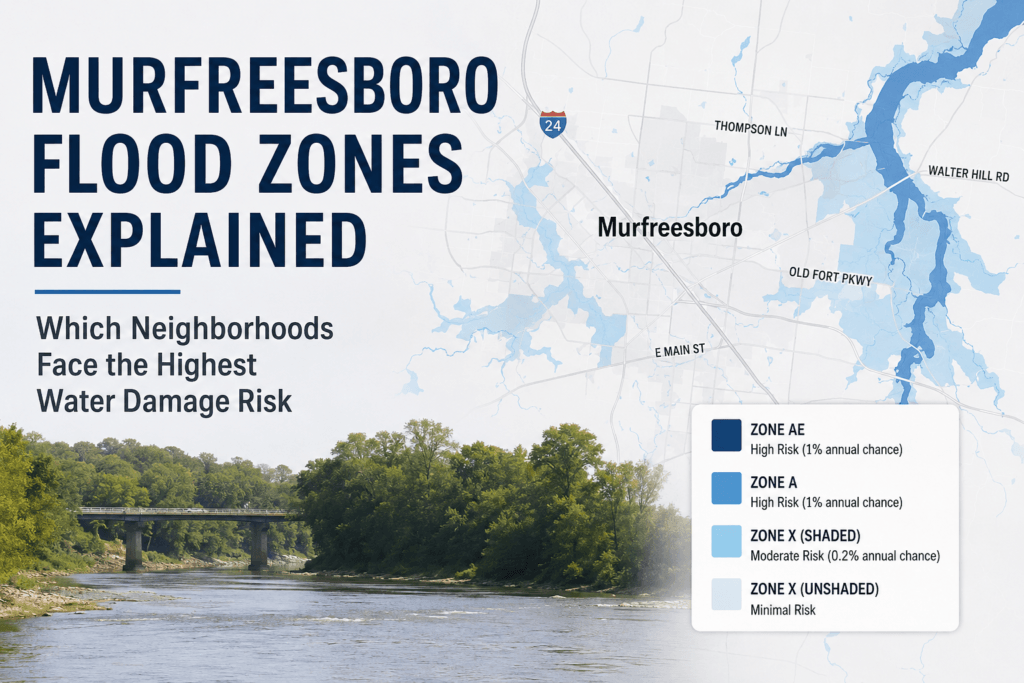
In the lower-elevation areas of Rutherford County — including properties near the Stones River corridor, the West Fork of Stones River drainage basin, and the lower portions of Smyrna and La Vergne near Percy Priest Lake’s watershed — seasonal water table elevation is a recurring crawl space issue.
When the regional water table rises during wet seasons, it can reach the level of the crawl space floor. At that point, water enters not through any construction deficiency but simply because it is at or above grade level. This is a different problem from surface intrusion and requires a different solution — typically an interior drain tile system, a sump pump installation, or both.
The tell-tale sign of water table intrusion versus surface intrusion is timing and distribution. Surface intrusion follows rain events closely and typically enters from specific directions corresponding to where water accumulates on the exterior. Water table rise happens more diffusely and may appear across the entire crawl space floor, sometimes without a direct recent rain event triggering it.
3. Vapor transmission through the ground surface
Even crawl spaces that never have standing water can suffer significant moisture damage through vapor transmission. Moist soil beneath the crawl space continually evaporates water vapor upward into the crawl space air. Without a proper vapor barrier on the soil surface, this vapor has no barrier between the ground and the structural materials above.
In a well-ventilated crawl space — the traditional approach used in most pre-2000 Tennessee construction — the theory was that exterior vents would allow this vapor to escape without damaging structural materials. In Middle Tennessee’s climate, this approach has significant limitations. During summer months, humid outdoor air entering through crawl space vents is actually warmer and more moisture-laden than the cooler air inside the crawl space. When warm humid air contacts the cooler crawl space materials, it condenses — adding moisture to structural materials rather than removing it.
This is the fundamental problem with vented crawl spaces in humid climates. The ventilation strategy that works in dry regions actively makes moisture problems worse in Middle Tennessee. An increasing number of Murfreesboro-area builders now use sealed, conditioned crawl spaces, but the vast majority of existing housing stock still has the traditional vented design.
What crawl space moisture actually does to a Murfreesboro home over time
Crawl space moisture is not just an aesthetic problem. Left unaddressed, it creates a cascade of structural and biological consequences that affect both the safety and the resale value of the property.
Wood rot in floor joists and subfloor materials
Floor joists and the subfloor sheathing they support are the primary structural casualties of chronic crawl space moisture. Wood in contact with elevated moisture levels over time undergoes biological decay — the cellular structure breaks down as fungi consume the lignin and cellulose that give wood its structural strength. The progression from visible moisture to structural degradation in an unaddressed crawl space moisture problem is typically measured in years, not decades, particularly in Middle Tennessee’s warm, humid summers.
By the time homeowners notice the symptoms — soft spots in flooring, a springy feeling when walking in certain areas, sagging hardwood floors — the joist damage is typically significant. Full joist replacement is far more expensive than the moisture management intervention that would have prevented it.
Mold growth in the structural assembly
Crawl space mold grows on floor joists, subfloor sheathing, rim joists, and any wood-based material that maintains elevated moisture content. The important and frequently misunderstood point is that crawl space mold affects the living space above it. Mold spores and volatile organic compounds from biological growth in the crawl space migrate upward through gaps in the floor assembly — around penetrations, at subfloor seams, and through the natural air movement that occurs in any building. People in the living space above an active mold-affected crawl space are breathing air that has traveled through that environment.
Tennessee has a moderate regulatory framework around mold disclosure in real estate transactions. Properties with known active mold in structural assemblies require disclosure to buyers and can be subject to renegotiated sale prices or required remediation before closing. The financial impact of discovering crawl space mold in the context of a sale is typically far greater than the cost of addressing it proactively.
HVAC efficiency reduction and air quality effects
Most Murfreesboro homes with crawl spaces run HVAC ductwork through the crawl space. Ducts in a humid crawl space environment accumulate surface condensation, which can grow biological contamination on duct surfaces and in the insulation around them. This reduces system efficiency and introduces contaminated air into the living space through the supply registers.
Homes with significant crawl space moisture problems almost always show elevated indoor humidity levels even when the HVAC system is functioning normally — because the moisture load from the crawl space is continuously introduced into the conditioned air above. Homeowners who notice that their home feels humid even with the air conditioning running in summer should include a crawl space inspection in their diagnostic process.
The correct professional response to crawl space water in Rutherford County
Professional crawl space water damage response involves several distinct phases that should not be telescoped or skipped:
- Assessment and source identification: Before any remediation begins, determining the cause of moisture entry is essential. Surface intrusion, water table rise, and vapor transmission each require different corrective approaches. Treating the wrong problem — installing a vapor barrier when the issue is hydrostatic pressure, or installing a sump pump when the issue is lot grading — wastes money without resolving the underlying condition.
- Standing water extraction: If there is standing water in the crawl space, this must be extracted using appropriate equipment before any other work can proceed. Pumping standing water from a crawl space requires equipment sized for the access constraints typical of residential crawl spaces.
- Structural drying: Wet framing, joists, and sheathing require professional drying using equipment positioned to move air through the crawl space and reduce moisture content in structural materials to safe levels. The IICRC standard target for wood framing moisture content is below 19 percent — readings above this level indicate active moisture conditions that support biological growth.
- Mold assessment and treatment: Once moisture content has been reduced to safe levels, assessment of any biological growth on structural materials determines whether remediation is needed. Active mold growth on structural materials requires removal of contaminated material and antimicrobial treatment of affected surfaces.
- Corrective moisture management installation: Depending on the source analysis, corrective measures may include vapor barrier installation on the crawl space floor and walls, perimeter drain tile installation, sump pump installation, crawl space encapsulation, or exterior lot grading correction. Proper moisture management prevents recurrence.
| Crawl space encapsulation versus vented crawl spaces in Tennessee Crawl space encapsulation — installing a thick, sealed vapor barrier on all soil surfaces and foundation walls, then conditioning the crawl space air — has become the preferred approach for Tennessee’s humid climate. A properly encapsulated crawl space maintains controlled humidity year-round and eliminates the condensation problems inherent in the traditional vented design. It also creates usable storage space and improves HVAC efficiency. The upfront cost is higher than vapor barrier alone, but the long-term performance in Middle Tennessee’s climate is significantly better. |
How do I know if my Murfreesboro crawl space has a moisture problem?
Common indicators include musty odors in lower areas of the home, soft or springy spots in the flooring, elevated indoor humidity during summer months, visible condensation on crawl space materials when you inspect it, standing water visible through crawl space vents, or white mineral deposits (efflorescence) on foundation walls. Any of these signs warrants a professional crawl space inspection.
Is crawl space flooding covered by homeowners insurance in Tennessee?
Coverage depends on the cause. Sudden and accidental water intrusion from a plumbing failure that results in crawl space flooding is typically covered under standard homeowners policies. Gradual moisture accumulation, vapor transmission, and ground water intrusion from rising water tables are generally excluded. FEMA flood insurance covers flood-related events. Understanding your specific coverage requires reviewing your policy language.
How much does crawl space water damage repair cost in Rutherford County?
Costs vary significantly based on extent of damage and required corrective measures. Basic moisture extraction and drying for a limited area may range from $1,500 to $4,000. Full crawl space encapsulation with drainage and sump installation runs $5,000 to $15,000 depending on the size of the space and complexity of the moisture management system required. Structural repair of damaged joists or subfloor adds to this range.
Do I need to fix the crawl space or just get a dehumidifier?
A standalone dehumidifier placed in a crawl space is not a corrective solution for water intrusion problems — it is a management tool for elevated ambient humidity in an otherwise dry space. If water is entering the crawl space through grading problems, hydrostatic pressure, or a high water table, the source must be corrected. A dehumidifier running against an active water entry pathway will run continuously, consume significant electricity, and not prevent structural damage.
My new construction home in Blackman has crawl space moisture. Is this a warranty issue?
Crawl space moisture in new construction can result from builder-caused grading deficiencies, inadequate vapor barriers, or incomplete sealing around utility penetrations — any of which may fall under Tennessee’s statutory new home warranty requirements under TCA 66-36-101. Builder warranties in Tennessee generally cover workmanship defects for one year and structural defects for longer periods. Documenting the moisture problem with professional moisture readings and photographs establishes the evidence base for a warranty claim.
| Dealing with water damage in Murfreesboro or Rutherford County? Call Rutherford Water Restoration 24/7: (615) 703-6099 | rutherfordwaterrestoration.com |