- IICRC AMRT Certified Specialists
Professional Mold Remediation Murfreesboro TN — Safe, Certified, and Permanent
Health Advisory:Mold Remediation Murfreesboro TN exposure can contribute to respiratory irritation, allergies, and other health concerns. Don’t delay remediation.
- EPA-Compliant Protocols
Certified Firm
We follow strictly regulated S520 IICRC standards for all remediation projects.
Rutherford Water Restoration's IICRC AMRT-certified specialists provide complete mold remediation for homes and businesses across Murfreesboro and Rutherford County, Tennessee. We follow IICRC S520 standard protocols from initial air quality sampling through post-remediation clearance testing — providing a signed clearance certificate that documents your home is safe. mold restoration Murfreesboro TN average summer humidity of 70–80% makes professional remediation critical — mold spore counts can reach dangerous levels within 24 hours of moisture exposure in Middle Tennessee's climate."
Common Types of Mold Found in Tennessee Homes
We identify and evaluate mold growth before remediation begins — no guesswork involved.
Stachybotrys chartarum (Black Mold)
Produces mycotoxins linked to severe respiratory illness and mycotoxin exposure symptoms including chronic fatigue and cognitive difficulties. Requires immediate professional removal — never attempt DIY Mold Remediation Murfreesboro TN.
High Risk
Aspergillus & Penicillium
These two species commonly co-occur in Tennessee homes and are frequently found in HVAC systems and behind drywall in humid climates.
Med Risk
Cladosporium
Most common outdoor mold that infiltrates Murfreesboro homes through HVAC systems and window seals during humid summer months.
low Risk
- Risk levels are based on typical indoor concentration impact. Always consult a professional.
Our Professional Mold Remediation Murfreesboro TN Process
A methodical, science-backed approach to restoring your indoor air quality and structural integrity.
Air Quality & Sampling
Baseline testing to determine spore levels. We collect air-O-cell spore trap samples and surface swab samples to establish baseline spore count levels. Results determine mold species present — including Stachybotrys, Aspergillus, and Cladosporium — and guide our containment and removal strategy.
01
02
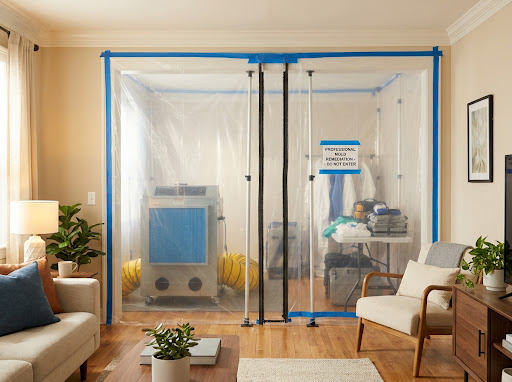
Containment Setup
6-mil polyethylene sheeting and negative air pressure containment using HEPA-filtered air scrubbers prevents cross-contamination and spore dispersal to unaffected areas of the property during substrate removal.
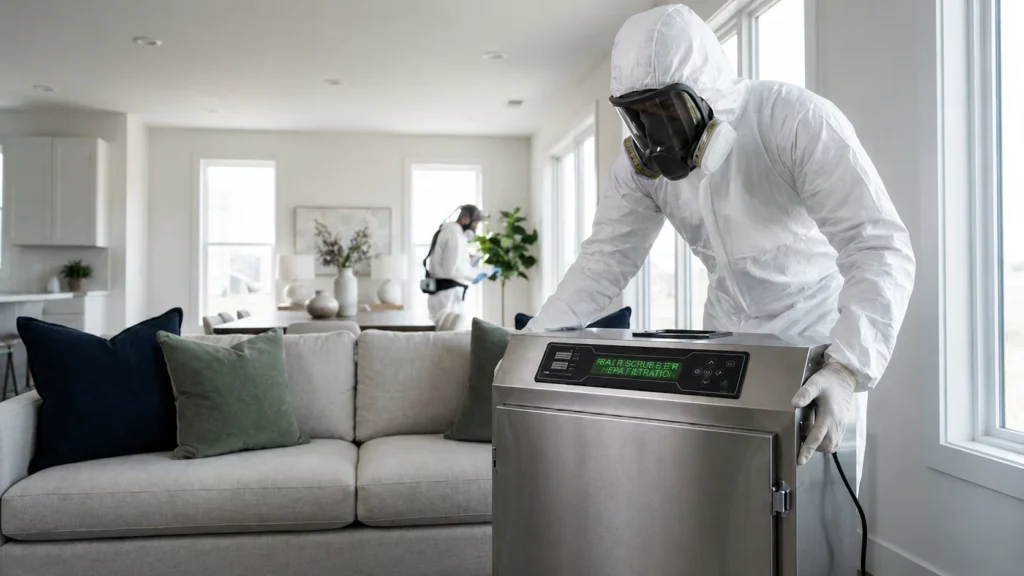
HEPA Air Filtration
Industrial scrubbers cleaning the atmosphere.
03
Material Removal
Contaminated substrate removal — including drywall, insulation, and wood framing with moisture content above 19% or active mold colonisation — following Tennessee OSHA medical waste disposal protocols.
04
Antimicrobial Tx
EPA-registered treatments on surfaces.
05
Final Clearance
Independent third-party post-remediation clearance testing confirms spore counts have returned to normal outdoor baseline levels. We provide a signed clearance certificate formatted for your insurance adjuster, real estate agent, or property records.
06
When to Test First
- Testing is also recommended before listing a Tennessee property for sale — Tennessee mold disclosure law requires sellers to disclose known mold, and a pre-listing air quality test provides documentation that protects both parties.Mold Remediation Murfreesboro TN
Remediate Immediately
- Visible mold growth exceeds 10 square feet.The EPA guidelines recommend immediate remediation when visible mold growth exceeds 10 square feet — regardless of whether testing has identified the specific species.
Do You Need Mold Testing or Mold Remediation?
Common Symptoms Associated With Mold Exposure
“If you’re experiencing concerning health symptoms, speak with a licensed healthcare professional.”
- Chronic Coughing
- Skin Irritation
- Sneezing & Congestion
- Shortness of Breath
Our team provides comprehensive air quality testing to measure airborne spore counts compared to outdoor baseline levels, giving you a clear picture of your home’s health status.

Mold Growth in Tennessee’s Humid Climate
- Rutherford County
- Murfreesboro
- Smyrna
- Christiana
- Blackman
- Lavergne
- Rockvale
- Water Hill
- Lascassas
- Milton
In Murfreesboro and surrounding Rutherford County, summer relative humidity regularly reaches 70–80% — well above the 60% colonisation threshold and significantly faster than mold growth timelines modelled for drier climates. The majority of Rutherford County homes built before 2000 feature vented crawl spaces — a construction design that works poorly in Tennessee’s humid summers. Warm, moisture-laden outdoor air entering through crawl space vents condenses on cooler structural materials, creating chronic elevated moisture content in floor joists and subfloor sheathing that sustains mold restoration murfreesboro tn colonies year-round. The Stones River humidity corridor through central Mold Remediation Murfreesboro TN intensifies this effect for properties in the lower-elevation eastern and northeastern parts of the city.
Frequently Asked Questions
What types of mold are most commonly found in Murfreesboro, TN homes?
The most frequently identified species in Rutherford County homes are Cladosporium (most common, found in HVAC systems and window seals), Aspergillus (grows behind drywall in humid conditions), Penicillium (common after water damage events), and Stachybotrys chartarum (black mold — produces mycotoxins, requires immediate professional remediation). Our air quality sampling identifies the specific species present before remediation begins.mold restoration murfreesboro tn
What is a mold remediation clearance certificate and do I need one?
A post-remediation clearance certificate is a document issued after independent third-party testing confirms that spore counts in your home have returned to normal outdoor baseline levels following remediation. In Tennessee, this certificate is required for most real estate transactions involving disclosed mold restoration murfreesboro tn, may be required by your mortgage lender, and is recommended for any insurance claim documentation. Under Tennessee mold disclosure requirements, sellers must disclose known mold — a clearance certificate is your proof that the issue was professionally resolved.Mold Remediation Murfreesboro TN
Is it safe to stay in my home during remediation?
Our containment protocols are designed to isolate affected areas completely. In many cases, you can stay in unaffected parts of the home. However, if HVAC systems are compromised or if occupants have severe sensitivities, temporary relocation may be advised.Mold Remediation Murfreesboro TN
What areas of Rutherford County do you serve?
We provide comprehensive mold testing, removal, and remediation services throughout Murfreesboro, TN, and all surrounding areas in Rutherford County. Our rapid-response service areas include Smyrna, La Vergne, Christiana, Rockvale, Blackman, Walter Hill, and neighborhoods surrounding Medical Center Parkway, Old Fort Parkway, and the MTSU campus.
Does homeowners insurance cover mold removal?
In most cases, homeowners insurance covers mold removal if the mold growth was caused by a sudden and accidental peril, such as a burst pipe or a sudden water leak. However, if the mold is a result of long-term neglect, poor ventilation, or lack of maintenance, the claim may be denied. We highly recommend checking your specific policy terms, and our team can assist you with the documentation required for insurance claims.
Concerned About Mold in Your Home? Let’s Solve It Safely.
- Available 24/7/365 — Rapid Local Response
Serving Prime Locations Across Murfreesboro
We provide 24/7 emergency restoration to every corner of Rutherford County, ensuring hyper-local authority and a rapid response guarantee.
- Hyper-Local
- Rapid Response
- Murfreesboro TN
- La Vergne TN
- Christiana TN
- Blackman, TN
- Readyville TN
- Rockvale TN
- Smyrna TN
- Eagleville TN
- Water Hill TN
- Milton TN
- Lascassas TN