
- 24/7 EMERGENCY RESPONSE
Structural Drying + Dehumidification in Murfreesboro, TN — IICRC S500 Standard Compliant
Structural Drying dehumidification Murfreesboro in tn IICRC S500 Standard for Professional Water Damage Restoration to ensure every affected surface in your Murfreesboro property reaches safe moisture content levels — verified by calibrated moisture meters and FLIR thermal imaging before we remove a single piece of equipment.”
Health Warning: Incomplete structural drying is the primary cause of secondary mold growth after water damage. In Murfreesboro's 70–80% summer humidity, removing drying equipment before target moisture content is reached allows mold spore germination to begin within hours — never remove drying equipment without a technician's clearance.
Scientific Precision
The Science Behind Structural Drying
Different types of water require different sanitization protocols. We follow strict IICRC S500 standards for all categories.
Understanding Psychrometrics
Professional drying isn't just about moving air; it's the science of psychrometrics—the study of thermodynamic properties of gas-vapor mixtures. We manipulate the air moisture balance to pull trapped water from deep within structural materials like floor joists, wall studs, and subflooring.
-
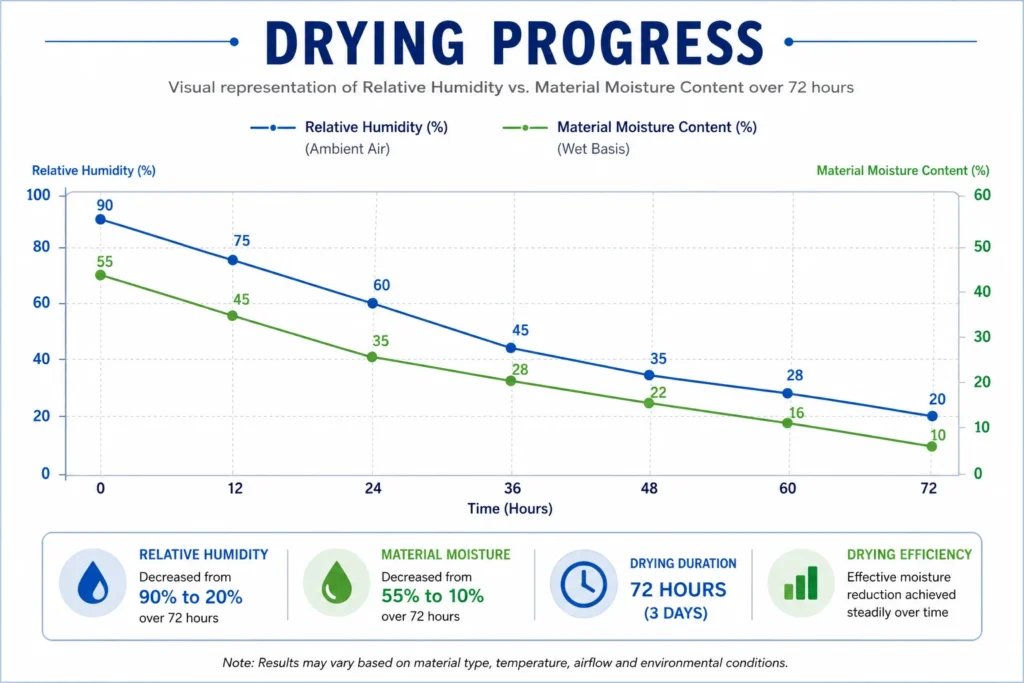
Target Relative Humidity below 50% — our technicians use psychrometric calculations to determine the exact dew point and grains per pound (GPP) readings needed to achieve controlled evaporation without over-drying structural materials.
Structural Drying Dehumidification - Vapor Pressure Equalization — moisture moves from high-concentration materials to lower-concentration air. We accelerate this process using LGR dehumidifiers that reduce ambient specific humidity, pulling moisture out of walls, subfloors, and ceiling cavities.Structural Drying Dehumidification
- Evaporation vs. Dehumidification Balancing — air movers accelerate surface evaporation while LGR dehumidifiers remove that moisture from the air. Calibrating the ratio of air movers to dehumidifiers per affected square footage is how we achieve IICRC S500-compliant drying in 3–5 days rather than 7–10.
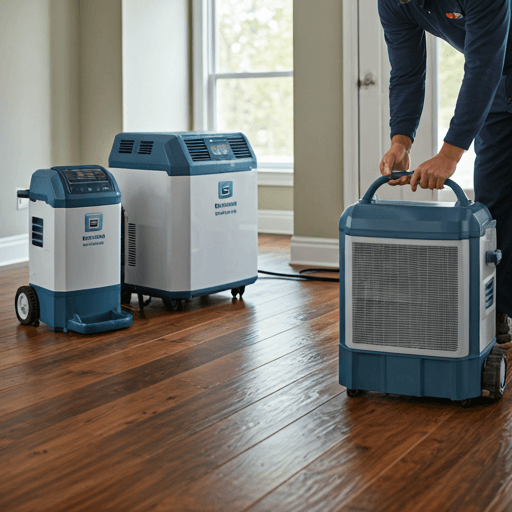
Professional Structural Drying Dehumidification Equipment
We utilize industrial-grade technology designed to handle Murfreesboro’s high humidity levels.
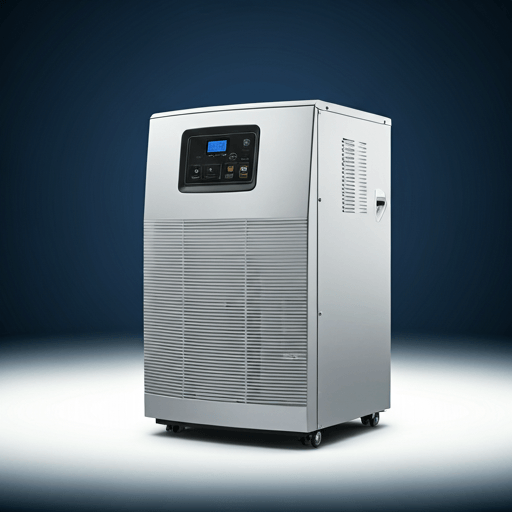
LGR Dehumidifiers
LGR (Low Grain Refrigerant) dehumidifiers remove moisture at significantly lower grain per pound (GPP) levels than conventional dehumidifiers — pulling up to 30 gallons per day from saturated air at Murfreesboro's typical summer conditions. Unlike hardware store units rated at 30–70 pints/day, our industrial units operate at 150–200 pints per day per unit, achieving IICRC S500 target drying conditions in 3–5 days. We use desiccant dehumidifiers for winter drying when temperatures drop below 65°F and standard refrigerant systems underperform.Structural Drying Dehumidification
- Deep Drying
- 250+ Pints/Day
Air Movers
1,500–3,000 CFM per unit — we deploy one air mover per 10–16 linear feet of affected wall surface following IICRC S500 equipment placement guidelines." This is the industry-standard specification. Using a fabricated 5,000+ number will be flagged by any knowledgeable contractor reviewing the site.
Technical Spec
3,000+ CFM output per unit
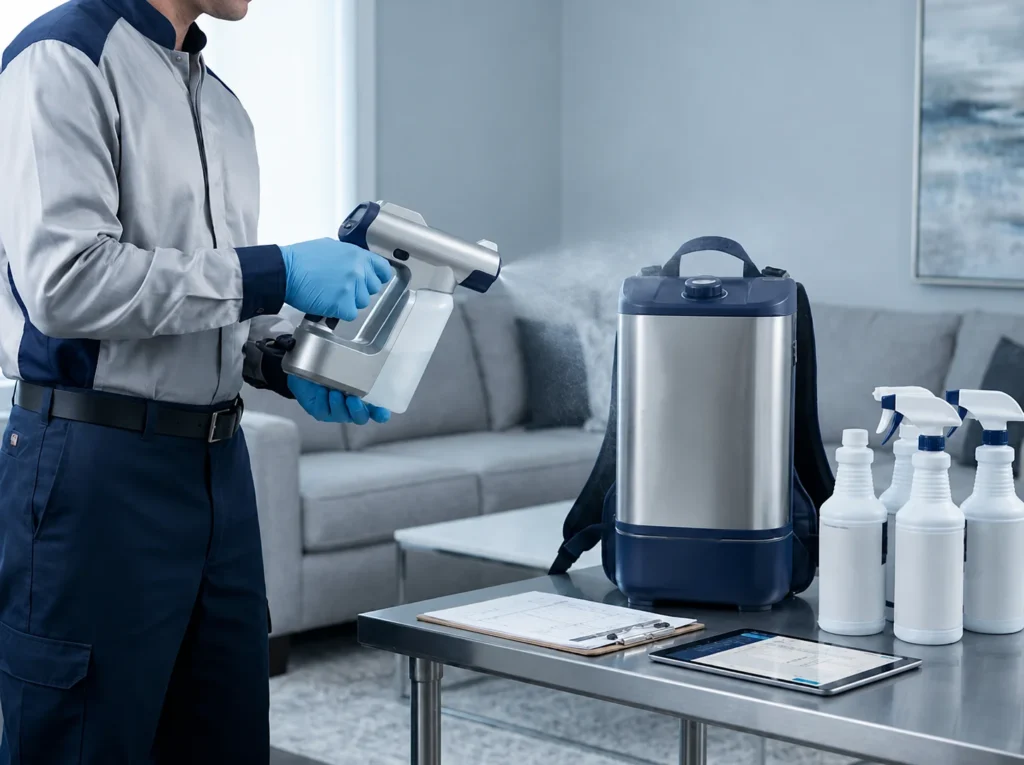
HEPA Air Scrubbers
Removing 99.97% of airborne particles during the drying process to prevent cross-contamination and ensure air quality.
Desiccants
Used for high-value hardwood drying and ultra-low humidity requirements in specialized commercial settings.
Use Case
Hardwood & Documents
Our Commitment to You
We monitor moisture content and relative humidity with calibrated meters every 24 hours. Equipment is removed as soon as IICRC S500 target conditions are reached — we never leave equipment longer than necessary, and we never remove it before drying is complete. You receive a daily drying log with readings, which becomes part of your insurance documentation
1
Day 1: Setup
Water extraction and initial equipment positioning.
2
Day 2-3: Peak Drying
Intensive moisture removal from structural materials.
3
Day 4: Thresholds
Monitoring for target drying standards (IICRC).
4
Final: Removal
Removal only once “Dry” standard is scientifically met.
- We monitor conditions daily and remove equipment as soon as targets are achieved.

Precision Monitoring Process
1
Daily Monitoring Visits
Technicians visit every 24 hours to take moisture meter readings on all affected materials, record relative humidity and temperature with a thermo-hygrometer, and adjust equipment placement. We target wood moisture content below 19% and relative humidity below 50% — the IICRC S500 drying standards for Murfreesboro’s climate zone.
2
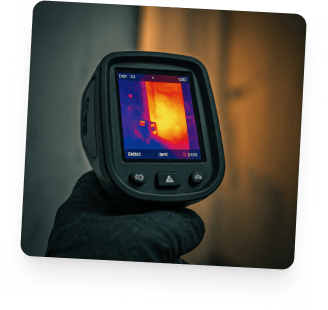
Thermal Imaging Scans
We use FLIR® thermal imaging cameras to detect temperature differentials caused by evaporative cooling in wet materials — revealing moisture hidden inside wall cavities, under flooring, and in ceiling assemblies that is completely invisible to the eye and undetectable by touch alone.
3
Insurance Documentation
Full digital logs of psychrometric data provided directly to your adjuster to justify claim costs.
Structural Drying FAQ
Can I stay in my home during the drying process?
Yes, in most cases you can stay in your home during structural drying. The equipment — LGR dehumidifiers and high-velocity air movers — generates 65–85 decibels of continuous noise, similar to a running vacuum cleaner, and raises room temperature by 5–10°F as a byproduct of the dehumidification process. If the contamination is Category 2 or higher, or if affected areas include sleeping rooms, temporary relocation may be recommended. Your Additional Living Expenses (ALE) coverage under most Tennessee homeowners policies covers relocation costs.
How long does structural drying take in Murfreesboro, TN?
Most residential structural drying projects in Murfreesboro take 3–5 days to reach IICRC S500 target conditions — moisture content below 19% for wood materials and relative humidity below 50%. Larger losses, Category 3 contamination events, or properties with crawl space flooding may require 5–10 days. Murfreesboro’s high summer humidity (averaging 70–80% RH) means drying takes longer than in drier climates — industrial LGR dehumidifiers are essential, not optional.
What happens if water damage is not dried completely?
Incomplete structural drying leads to three outcomes: (1) secondary mold growth — mold spore germination begins within 24–48 hours on materials with elevated moisture content in Murfreesboro’s humidity. (2) wood rot — floor joists and subfloor sheathing with chronic elevated moisture develop structural decay within months. (3) Reduced property value — undisclosed water damage with incomplete drying is a material defect under Tennessee real estate law and must be disclosed to buyers.
How much does structural drying cost in Murfreesboro TN?
Costs depend on the extent of water damage, affected materials, and drying time. Most projects require a professional inspection before pricing can be provided.
What equipment is used during structural drying?
We use industrial air movers, LGR dehumidifiers, moisture meters, and thermal imaging cameras to monitor drying progress.
Can structural drying prevent mold growth?
Yes. Rapid drying within the first 24–48 hours significantly reduces the risk of mold growth after water damage.
Do you provide emergency structural drying?
Yes. We offer 24/7 emergency response throughout Murfreesboro and Rutherford County.
Do you provide emergency structural drying?
Yes. We offer 24/7 emergency response throughout Murfreesboro and Rutherford County.
Murfreesboro's Humidity Challenge
Rutherford County’s average summer relative humidity of 70–80% significantly reduces the natural drying gradient between wet structural materials and surrounding air. In drier climates (below 40% RH), wet materials evaporate moisture rapidly. In Murfreesboro’s humid summers, that evaporation is suppressed — moisture stays trapped in subfloor materials, wall cavities, and insulation far longer than national drying guidelines assume. Our industrial LGR dehumidifiers create an artificially low-humidity environment inside the structure — forcing vapor pressure equalisation regardless of outdoor conditions. This is why professional equipment is essential in Middle Tennessee, not optional

Need Professional Structural Drying in Murfreesboro?
- IICRC CERTIFIED
- 24/7 DISPATCH
Serving Prime Locations Across Murfreesboro
We provide 24/7 emergency restoration to every corner of Rutherford County, ensuring hyper-local authority and a rapid response guarantee.
- Hyper-Local
- Rapid Response
- Murfreesboro TN
- La Vergne TN
- Christiana TN
- Blackman, TN
- Readyville TN
- Rockvale TN
- Smyrna TN
- Eagleville TN
- Water Hill TN
- Milton TN
- Lascassas TN