Emergency Water Extraction in Murfreesboro, TN — Industrial-Grade Equipment, 45-Minute Response
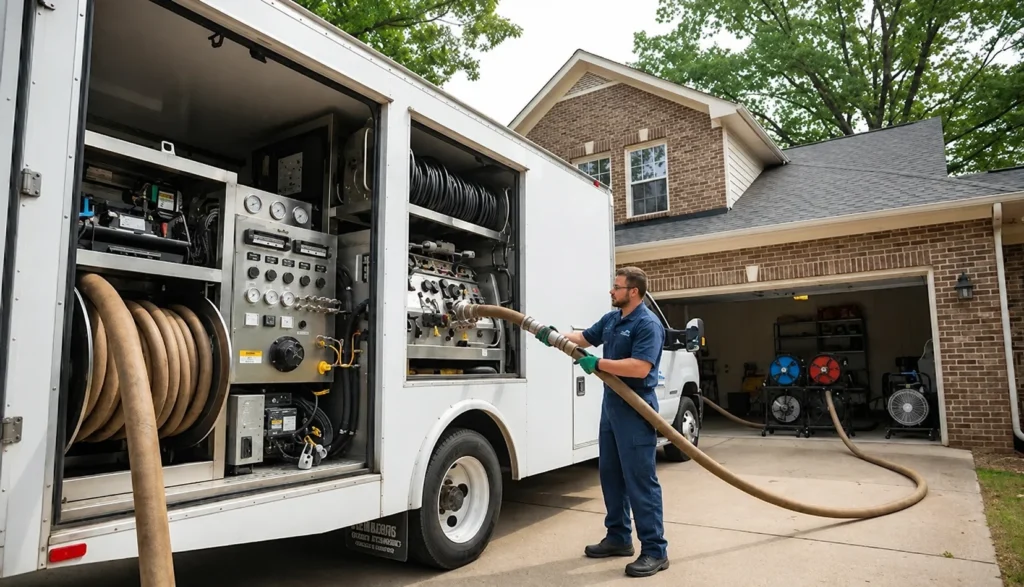
When water enters your property, every minute of delay allows it to penetrate deeper into subfloor materials, wall cavities, and structural framing. Our IICRC WRT-certified team deploys truck-mounted extraction units capable of removing thousands of gallons per hour — serving all of water extraction Murfreesboro and Rutherford County, 24/7.
Murfreesboro Water Extraction Services
Professional Water Extraction Equipment
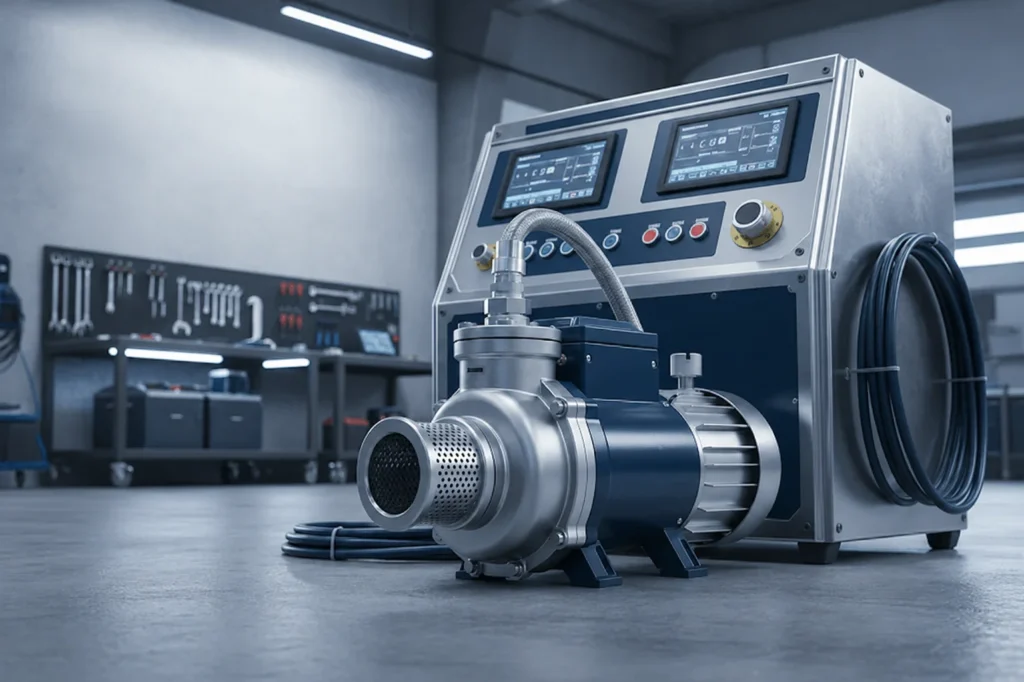
Submersible Pumps
When facing heavy flooding or standing water exceeding 2 inches, we deploy high-volume submersible pumps rated at 2,000–4,500 gallons per hour — capable of removing 3–6 inches of standing water from an average water extraction Murfreesboro basement in under 30 minutes. Once standing water is below 1 inch, we transition to truck-mounted extraction units for deep extraction from carpet padding, subfloor materials, and structural cavities.
Truck-Mounted Extraction Units
Our truck-mounted extraction units generate 200+ inches of water extraction murfreesboro lift — approximately 10 times the suction of portable extraction units used by restoration crews without dedicated vehicles. This allows us to extract residual moisture from carpet backing, tack strips, subfloor sheathing, and structural cavities through hose runs up to 200 feet from the truck — reaching every corner of your Murfreesboro home without equipment moving inside.
Infrared Thermal Cameras
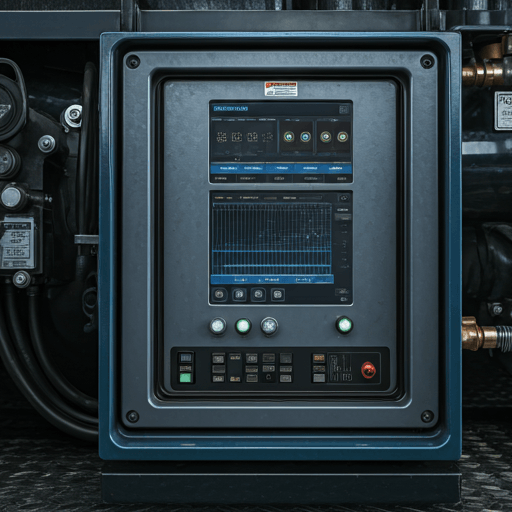
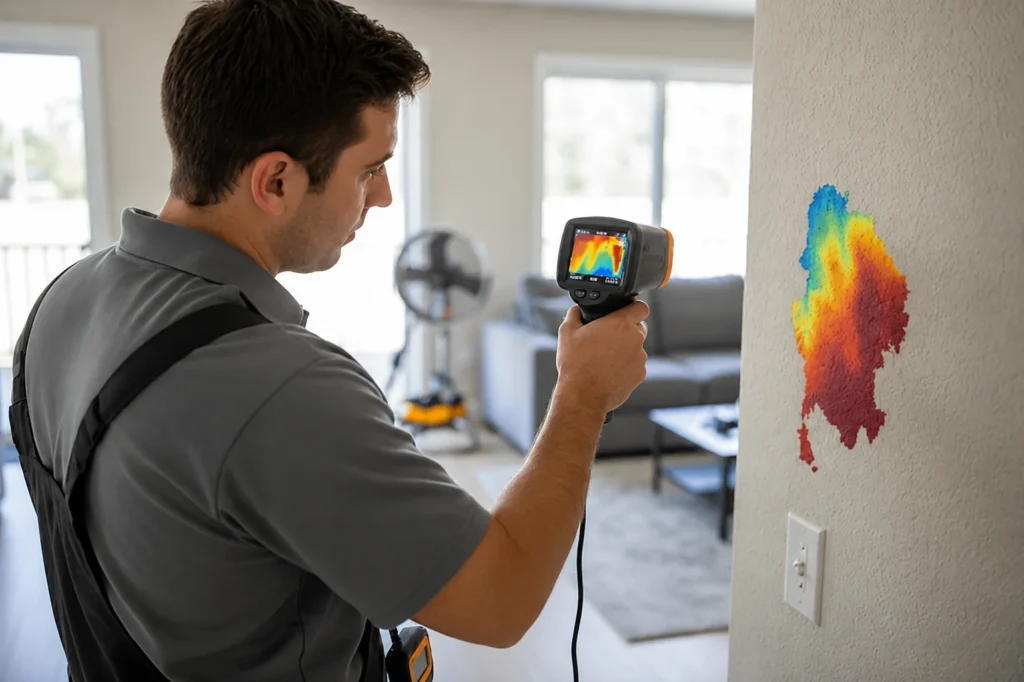
Water water extraction murfreesboro often hides behind drywall and under hardwood flooring. Our technicians use FLIR infrared cameras to map moisture signatures. By identifying thermal anomalies, we can target extraction efforts precisely, ensuring no “silent” pockets of water remain to cause future mold issues.
Our Water Extraction Process
1
Initial Assessment & Moisture Mapping
Immediate site survey to determine the extent of water intrusion using moisture meters and infrared tech.
2
Category Classification
IICRC water category classification — Category 1 (clean water from supply lines), Category 2 (gray water from appliances or overflows), or Category 3 (black water including sewage) — determines PPE requirements, containment protocols, and whether affected materials can be dried in place or must be removed
3
High-Volume Extraction
Truck-mounted water extraction murfreesboro removes standing water from hard surfaces and carpet at industrial rates. Weighted extraction tools press against saturated carpet to pull moisture from carpet backing and pad materials. We assess whether carpet and pad are salvageable — in Murfreesboro’s humidity, Category 2 or higher saturated carpet that has been wet for more than 24 hours typically requires removal
4
Surface Moisture Removal
Specialised water extraction murfreesboro tools target crevice moisture in baseboards, door frames, and structural joints. Moisture meter readings taken at this stage establish the baseline moisture content percentage for each affected material — data that becomes part of your drying documentation and insurance claim.
5
Thermal Imaging Scan
Final verification scan to ensure all bulk liquid has been successfully removed.
6
Drying Equipment Placement
Industrial LGR dehumidifiers and high-velocity air movers are positioned following IICRC S500 equipment placement guidelines — one air mover per 10–16 linear feet of affected wall surface. This handoff from extraction to structural drying begins the psychrometric drying process that removes residual bound moisture from structural assemblies.
Understanding Water Damage Categories
Different types of water require different sanitization protocols. We follow strict IICRC S500 standards for all categories.
Category 1: Clean Water
Originates from sanitary sources — broken supply lines, burst pipes (the leading cause of water damage in Murfreesboro during January–February freeze events), overflowing sinks, or rain intrusion through roof failures. Low immediate health risk, but classification degrades: Category 1 water becomes Category 2 after 24–48 hours of contact with building materials in Murfreesboro's warm, humid conditions — faster than the 72-hour national standard.
LOW RISK
Category 2: Gray Water
Contains biological or chemical contamination at levels sufficient to cause discomfort or illness — sources include dishwasher overflow, washing machine discharge, toilet overflow (urine only, no feces), and HVAC condensate overflow. In Murfreesboro homes, HVAC condensate overflows are among the most common Category 2 events during peak summer operation. Requires antimicrobial treatment of all contacted surfaces after extraction.
MODERATE RISK
Category 3: Black Water
Grossly contaminated water containing dangerous pathogens including E. coli, Salmonella, hepatitis A, and norovirus. Sources include sewage backups, rising floodwater from the Stones River corridor, and any water that has contacted soil or waste material. Requires full biohazard PPE, containment, and specialised disposal. See our dedicated sewage cleanup page for full Category 3 protocols.
EXTREME RISK
Water Extraction Murfreesboro FAQ
Can my hardwood floors be saved after water damage in Murfreesboro?
Possibly — it depends on water category, exposure duration, and wood species. Category 1 water in contact with hardwood for under 24 hours in Murfreesboro has a reasonable chance of drying in place using specialised drying mats and low-profile air movers. Hardwood exposed to Category 2 or 3 water, or left wet for more than 24 hours in our humid climate, typically shows cupping or crowning and requires removal. We assess moisture content of the wood and subfloor within the first hour and give you an honest evaluation before any work begins.
Can you detect water that I can't see?
Yes. Our technicians use two tools that detect moisture invisible to the naked eye: (1) FLIR thermal imaging cameras identify temperature differentials caused by evaporative cooling in wet materials — revealing moisture behind drywall, under hardwood floors, and inside wall cavities. (2) Calibrated pin and pinless moisture meters measure the actual moisture content percentage of structural materials, allowing us to map the full extent of water migration before a single piece of drywall is removed.
Why can't I just use a shop vac or wet vacuum to remove the water myself?
A shop vac removes surface water — it cannot extract residual moisture from carpet backing, subfloor materials, drywall, or wall cavities. Our truck-mounted extraction units generate 200+ inches of water lift and extract moisture from materials at depths a shop vac cannot reach. In Murfreesboro’s 70–80% summer humidity, leaving residual moisture in structural materials creates conditions for mold growth within 24 hours — even after the visible water is gone. Professional extraction is the only way to remove bound moisture from structural assemblies.
How long does water extraction take?
The physical water extraction process typically takes anywhere from 1 to 4 hours, depending on the volume of standing water and the size of the affected area. However, please note that the complete structural drying and dehumidification process that follows usually takes between 3 to 5 days to ensure all hidden moisture is entirely removed from walls and subfloors.
Can water extraction prevent mold growth?
Yes, rapid water extraction is the single most effective way to prevent mold growth. Mold spores can begin to colonize and grow within 24 to 48 hours of water exposure. By extracting standing water immediately and setting up professional drying equipment within this critical window, you significantly reduce the risk of toxic mold developing in your property.
Do you work with insurance companies?
Yes, we work directly with all major homeowners insurance companies. We fully document the entire water damage restoration process, including taking before-and-after photos, mapping moisture levels, and detailing the extraction work performed. We can help you navigate the claims process smoothly and handle direct billing with your insurance provider to minimize your stress.
What types of equipment do you use?
We use top-tier, commercial-grade restoration equipment to handle water extraction and drying. Our inventory includes powerful truck-mounted extraction units, industrial air movers, low-grain refrigerant (LGR) dehumidifiers, subfloor drying mats, and advanced moisture detection tools like FLIR thermal imaging cameras and pin/pinless moisture meters to find hidden water pockets.
Comprehensive Recovery Services
Structural Drying
The critical next step after extraction to prevent mold and rot.
Mold Remediation
Professional treatment for properties with delayed extraction.
Flood Restoration
Full-service reconstruction and cleaning for storm damage.
Standing Water in Your Home Right Now? Call Immediately.
Delaying extraction increases repair costs exponentially. Our emergency response team is ready to dispatch now.
LICENSED • INSURED • 24/7/365 RESPONSE
Serving Prime Locations Across Murfreesboro
We provide 24/7 emergency restoration to every corner of Rutherford County, ensuring hyper-local authority and a rapid response guarantee.
- Hyper-Local
- Rapid Response
- Murfreesboro TN
- La Vergne TN
- Christiana TN
- Blackman, TN
- Readyville TN
- Rockvale TN
- Smyrna TN
- Eagleville TN
- Water Hill TN
- Milton TN
- Lascassas TN