After water floods your home in Murfreesboros tn, the first question most homeowners ask is not “how do I dry it?” — it is “am I covered?” The answer to that question depends on a distinction that confuses thousands of Tennessee homeowners every year, and misunderstanding it can cost you tens of thousands of dollars. This guide explains exactly what Tennessee homeowners insurance covers, what it does not cover, and what every Rutherford County homeowner should know before a water damage in Tennessee.
The Core Rule: Source Determines Coverage
Tennessee homeowners insurance coverage for water damage turns entirely on one factor
where the water came from and whether it was sudden.
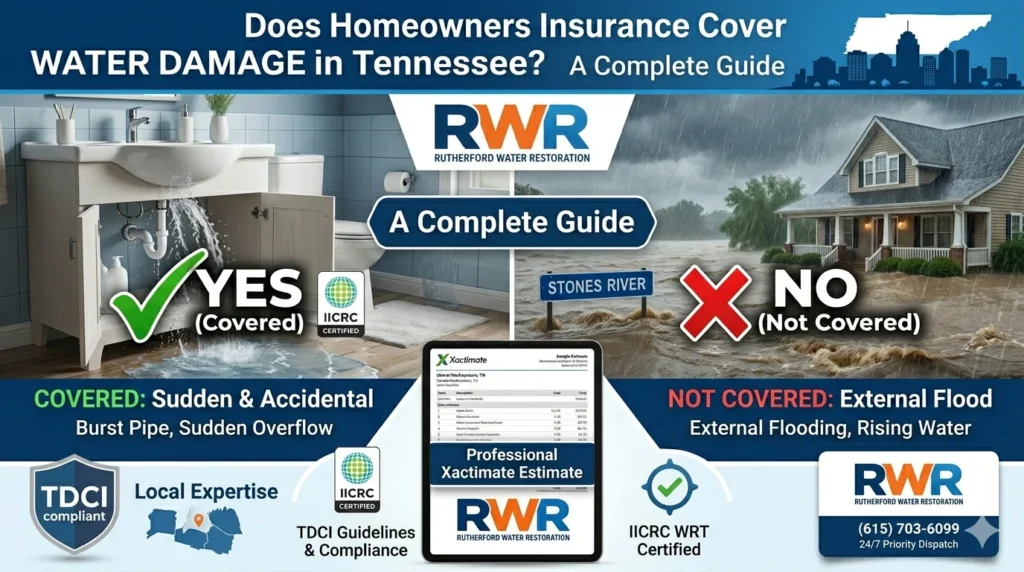
Homeowners insurance in Tennessee — as in all U.S. states — is designed to cover sudden and accidental events that originate inside your home. It is not designed to cover flooding from external water sources, regardless of how severe the damage is.
Here is the practical breakdown:
Generally COVERED by standard Tennessee homeowners insurance:
- Burst pipe from a sudden freeze or pressure failure
- Washing machine overflow or supply line failure
- Dishwasher leak or hose failure
- Water heater rupture
- Toilet overflow or wax ring failure
- Ice dam or roof leak allowing rain entry during a specific storm event
- Accidental overflow of a bathtub or sink
Generally NOT COVERED by standard Tennessee homeowners insurance:
- Rising floodwater from Stones River, Lytle Creek, or any external source
- Stormwater runoff entering your basement or crawl space from outside
- Sinkhole flooding (a specific Murfreesboro risk — Todds Lake sinkhole area)
- Sewer and drain backup (unless you have a sewer backup rider)
- Damage from a slow, gradual leak that went undetected for weeks or months
- Maintenance failures (a pipe that rusted through over time)
- Water damage from a neglected roof in poor condition
This distinction — sudden internal versus gradual or external — is the single most important thing a Rutherford County homeowner can understand about water damage insurance.
Tennessee-Specific Rules and the TDCI
The Tennessee Department of Commerce and Insurance (TDCI) regulates all homeowners insurance policies issued in the state. Tennessee follows a comparative fault framework, which means insurers have some latitude in disputing claims where homeowner negligence contributed to the damage.
In practice, this means Tennessee insurers frequently dispute water damage claims by arguing the damage resulted from a “gradual leak” the homeowner should have detected and fixed — rather than a sudden event. This distinction is why professional documentation from day one matters so much.
The “gradual leak” denial: If your pipe has been slowly dripping inside a wall for six months and finally causes visible damage, your insurer may deny the claim on grounds that the damage was foreseeable and preventable. Tennessee law does not require your insurer to cover deterioration or neglect.
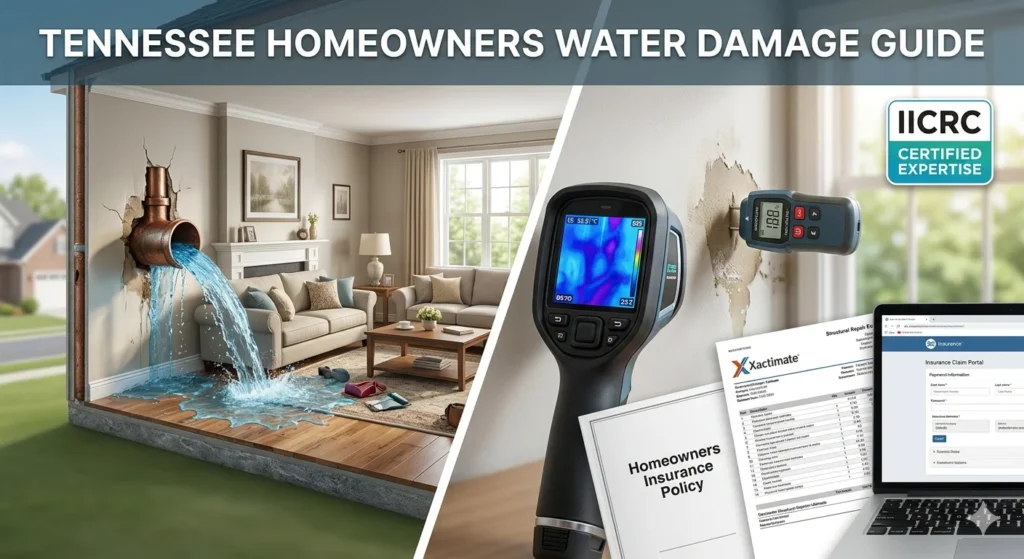
The defense: Professional moisture documentation from an IICRC-certified company — using thermal imaging cameras and moisture meters — can establish that damage was sudden and acute rather than gradual. A well-documented claim is significantly harder to deny.
Do You Need Separate Flood Insurance in Murfreesboro?
Murfreesboro’s position within the Stones River Watershed — which covers 556 square miles of Rutherford County — means many properties face flood risk that standard homeowners insurance does not cover.
The National Flood Insurance Program (NFIP) provides the only federally backed flood coverage available in Tennessee. It is sold through private insurance agents and is separate from your homeowners policy. NFIP policies cover:
- Building damage from flooding (up to $250,000 for structure)
- Contents damage from flooding (up to $100,000 for contents, separate policy)
- Flood defined as: inundation of normally dry land from overflow of inland waters, unusual and rapid accumulation of runoff, or mudslide
Murfreesboro flood zones: The City of Murfreesboro’s floodplain management program designates flood zones based on FEMA flood maps. Homes in Zone AE (100-year flood plain) are required by most mortgage lenders to carry NFIP flood insurance. The West Fork Stones River, Lytle Creek, and Todds Lake sinkhole area are primary designated flood risk zones.
To check your Murfreesboro property’s flood zone designation, visit murfreesborotn.gov/2504/Floodplain-Management. Homes outside designated flood zones are not required to carry flood insurance but remain vulnerable to surface flooding during extreme events — Rutherford County has experienced significant flooding events in 1902, 1944, 1945, 1948, 1955, 1963, and 1975.
The waiting period: Standard NFIP flood policies have a 30-day waiting period before coverage takes effect. You cannot purchase flood insurance the day before a storm. If you live in or near a flood-prone area of Rutherford County, purchase coverage well before storm season (December–April is the highest-risk period in Murfreesboro).
Sewage Backup Coverage: The Add-On Most Tennessee Homeowners Skip
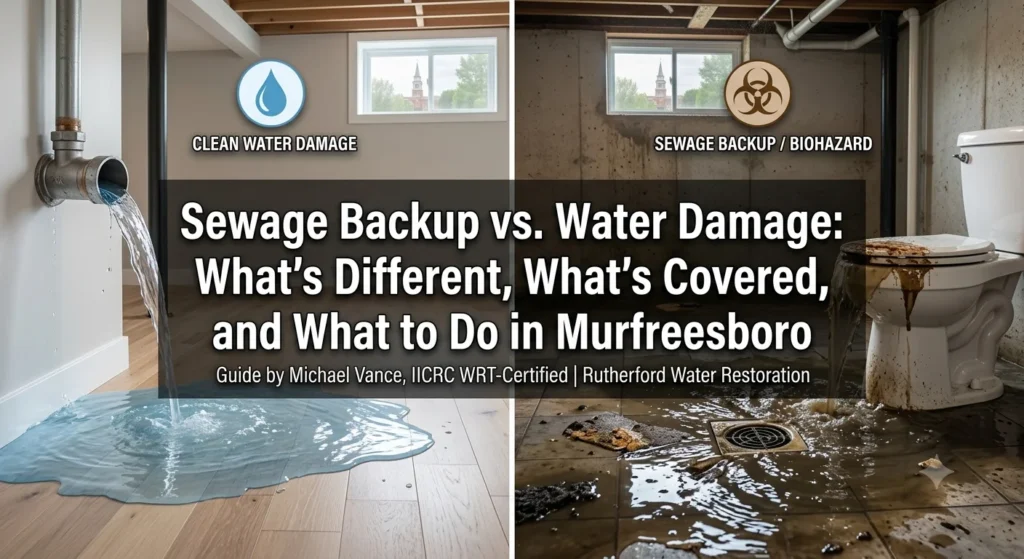
Sewage backup is one of the most expensive and least covered water damage events in Tennessee. Standard homeowners insurance does not cover damage from water that backs up through drains or sewers — even if the backup was caused by a municipal sewer failure entirely outside your control.
In Murfreesboro and Rutherford County’s older neighborhoods — particularly areas with combined stormwater/sewer systems — heavy rain events can overwhelm municipal sewer capacity and force sewage backward into homes through floor drains, toilet connections, and basement sinks.
Sewer backup rider: Most major Tennessee insurance carriers offer a sewer and drain backup endorsement for $40–$100 per year. This add-on covers cleanup, remediation, and replacement of damaged materials from sewage events. Given that a professional sewage backup cleanup in Murfreesboro averages $3,000–$8,000, this is one of the highest-value endorsements available.
If you have not added a sewer backup rider to your Tennessee homeowners policy, call your agent today.
How to File a Water Damage in Tennessee: Step by Step
If you are filing a water damage claim in Murfreesboro, follow these steps to maximize your claim recovery:
Step 1: Document Before You Touch Anything
Photograph and video every affected area before beginning any cleanup. Capture:
- The water source and all affected rooms
- Standing water (measure depth if possible)
- All damaged materials: flooring, drywall, baseboards, cabinets, contents
- The water meter reading to establish volume
Courts and insurance dispute panels consistently rule in favor of documented claims over undocumented ones.
Step 2: Call Your Insurance Company Immediately
Report the claim the same day the damage occurs. Tennessee insurance law requires insurers to acknowledge receipt of a claim within 10 days and make a coverage decision within 15 days of receiving all necessary documentation. The clock starts when you report — earlier reporting means earlier resolution.
Step 3: Call a Restoration Company Before the Adjuster Arrives
You are not required to wait for an insurance adjuster before beginning mitigation. In fact, waiting increases damage and can give your insurer grounds to reduce your claim by arguing you did not mitigate promptly. Tennessee homeowners have a legal duty to mitigate damages once they are aware of them.
A professional restoration company creates Xactimate documentation — the industry-standard format that insurance adjusters use for every claim. When your documentation is in Xactimate format from day one, adjuster processing is faster and disputes are less common.
Step 4: Do Not Sign or Accept Anything Without Review
Your insurance adjuster works for your insurer, not for you. Their initial estimate may undervalue labor rates, miss hidden damage that only thermal imaging reveals, or exclude line items that are legitimately part of your claim. You have the right to:
- Request a copy of your adjuster’s estimate
- Dispute any line item with supporting documentation
- Hire a public adjuster (for large claims) to advocate on your behalf
- Request an appraisal or invoke the Tennessee complaint process through the TDCI if you believe your claim was wrongly denied
Step 5: Use Xactimate Documentation from Your Restoration Company
Rutherford Water Restoration documents every job using Xactimate — the same software your insurance adjuster uses. This means our estimates and the adjuster’s estimates use the same format, the same line items, and the same regional cost data for Murfreesboro and Rutherford County. When both sides are working from Xactimate, disputes resolve faster.
Common Reasons Water Damage Claims Are Denied in Tennessee
Understanding why claims get denied helps you avoid the mistakes that trigger denials:
Gradual damage: The most common denial reason. If your insurer can show that damage developed over weeks or months rather than from a sudden event, they will likely deny coverage. Maintain your plumbing, check under sinks regularly, and address slow leaks immediately.
Flood from external sources: If water entered from outside the structure — rising streets, overland runoff, Stones River flooding — your homeowners policy does not cover it. Only NFIP flood insurance does.
Failure to mitigate: Tennessee law requires homeowners to take reasonable steps to stop damage from worsening. If you discovered a burst pipe at 6pm and did not call for help until the next morning, your insurer may argue you failed to mitigate and reduce your claim.
Undisclosed pre-existing damage: If your adjuster finds evidence of previous unrepaired water damage, your insurer may deny the current claim or reduce it significantly.
Lack of documentation: Claims without photos, videos, or professional documentation are more easily disputed. Always document before touching anything.
What Rutherford Water Restoration Does for Your Insurance Claim
Our role in the insurance claim process begins the moment we arrive on site and continues through the final invoice:
Day 1 documentation: We photograph and measure every affected area with moisture meters and thermal imaging cameras. This documentation establishes the scope of damage before any work begins.
Xactimate estimates: Our restoration scopes are written in Xactimate format, matched to Murfreesboro and Rutherford County regional cost data. Adjusters receive documentation they can process without requesting revisions.
Direct insurance communication: We maintain working relationships with adjusters from the major Tennessee carriers operating in Rutherford County. We know what each carrier’s documentation requirements are and provide it proactively.
Supplement management: When hidden damage is discovered during drying — as frequently happens when thermal imaging reveals moisture behind walls — we prepare Xactimate supplements to capture the additional scope. You do not miss legitimate coverage.
Contents documentation: We inventory and document affected personal property for contents claims separately from the structural claim.
Frequently Asked Questions
Does Tennessee homeowners insurance cover mold after water damage?
Mold remediation is covered when it results directly from a covered water damage event. If a burst pipe causes water intrusion and mold develops within days, the mold remediation is typically covered as part of the water damage claim. Mold that developed from a long-term moisture problem without a sudden event is usually not covered.
Does homeowners insurance cover a sewage backup in Murfreesboro?
Not by default. Standard Tennessee homeowners policies exclude sewage and drain backup. You need to add a sewer backup endorsement to your policy. The coverage typically costs $40–$100 per year and covers cleanup and restoration costs.
How long does a water damage insurance claim take in Tennessee?
Tennessee law requires insurers to make a coverage decision within 15 days of receiving all documentation. With complete Xactimate documentation from day one, most straightforward claims resolve within 2–4 weeks. Complex claims with multiple supplements or disputes can take 2–3 months.
What if my claim is denied?
Request a written explanation of the denial citing the specific policy language. If you believe the denial is improper, you can file a complaint with the Tennessee Department of Commerce and Insurance at tn.gov/commerce. For large disputed claims, consider hiring a public adjuster.
Protecting Your Rutherford County Home Before the Next Event
The best time to understand your insurance coverage is before you need it. Review your Tennessee homeowners policy for:
- Water damage coverage and any exclusions
- Whether you have a sewer and drain backup rider
- Whether you are in a Murfreesboro flood zone that requires NFIP coverage
- Your deductible for water damage claims
Rutherford Water Restoration is available to assist Murfreesboro homeowners with post-loss documentation and insurance coordination. If you are currently dealing with water damage, call us now.
Call (615) 703-6099 — 24/7 emergency response across Rutherford County.